24
Jun
Threadless, Internally Threaded, or Hinged: Which Body Piercing Jewelry Style Is Right?
0
0
0
Body piercing jewelry is not only about material and design. The construction style also matters. Threadless jewelry, internally threaded pieces, and hinged rings each offer different advantages depending on the piercing type, intended use, and customer preference.
For buyers, studios, and resellers, understanding these differences helps make product selection more practical and better aligned with how the jewelry will actually be used.
If you are comparing jewelry styles for different placements, our Piercing Glossaries and Product Specification pages can also help.
What Is Threadless Jewelry?
Threadless jewelry uses a pin-and-post system rather than a screw thread. The decorative end is secured by tension, which allows the jewelry to be inserted and closed without twisting threaded parts together.
This style is popular because it can be practical, clean-looking, and easy to work with once the fit is correct. It is also widely used in modern body piercing jewelry collections because it supports a wide variety of tops and styling options.
Threadless jewelry is often chosen for:
- flat back labrets
- ear piercings
- minimalist styling
- interchangeable end options
- modern studio use
What Is Internally Threaded Jewelry?
Internally threaded jewelry uses a threaded pin that screws into the inside of the post or bar. This creates a secure connection while keeping the external surface of the post smooth.
For many studios and buyers, internally threaded jewelry remains an important standard because it offers a reliable, familiar construction style across many body jewelry categories.
Internally threaded jewelry is often chosen for:
- barbells and labrets
- more traditional body jewelry setups
- customers who prefer a screwed closure system
- product lines where secure fastening is a priority
What Are Hinged Rings and Clickers?
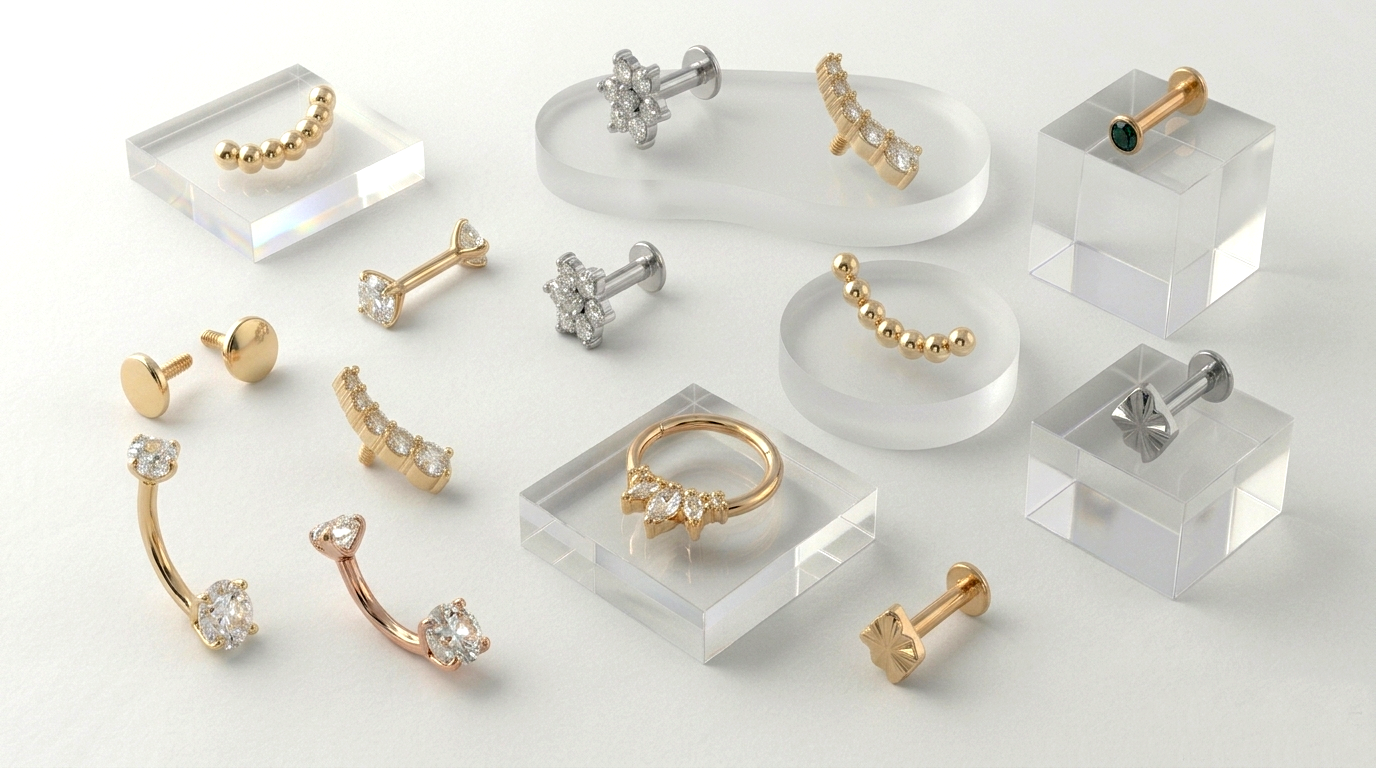
Hinged rings, often called clickers, use a built-in hinge mechanism that opens and closes with a clicking action. These are especially popular for ring-style jewelry because they simplify insertion and closing compared with traditional captive or segment rings.
They are widely used across multiple piercing placements and have become one of the most commercially important styles in modern body jewelry.
Hinged rings are often chosen for:
- septum piercings
- ear piercings
- daith, helix, and other ring placements
- customers who want a ring with easier handling
- decorative styles with strong visual impact
Which Style Is Easier to Use?
This depends on the product category and the user’s familiarity.
- Threadless jewelry is often appreciated for flexibility and interchangeable styling
- Internally threaded jewelry is often valued for a familiar, secure construction
- Hinged rings are often preferred when a ring look is desired with easier opening and closing
Ease of use is not only about the mechanism itself. It also depends on the piercing placement, jewelry size, and how often the jewelry is being changed.
Which Style Is Right for the Piercing?
Different styles suit different placements better.
For example:
- a threadless flat back may be ideal for many ear placements
- an internally threaded barbell may be a practical choice for standard body jewelry categories
- a hinged clicker may be better suited to ring-based placements where appearance and ease of handling both matter
To compare jewelry styles with piercing locations, visit our Piercing Glossaries page.
Style Matters Too
Construction style also affects how the final piece looks. Some buyers want minimal and discreet jewelry. Others want ring styles with more visual presence. Some need flexible systems with interchangeable ends, while others prioritize standard barbell or ring formats.
That is why product selection should consider not only material and size, but also the construction style itself.
You can also review sizing and measurement references on our Size Charts page.
Final Thoughts
Threadless, internally threaded, and hinged jewelry styles each have their place. The right choice depends on the piercing type, intended use, visual preference, and the level of flexibility needed in the jewelry line.
For studios and wholesale buyers, understanding these differences helps build a more useful and better-balanced product selection.
If you need help choosing the right jewelry style for a product category or piercing placement, please contact our team.