
13
Oct
Initial Piercing Jewelry vs Jewelry for Healed Piercings: What Professionals and Buyers Need to Know
0
0
0
Not all body jewelry has the same job.
Jewelry selected for a fresh piercing has to support a healing piercing site. Jewelry chosen after the piercing has healed can offer considerably more freedom in design, finish and styling.
For professional piercers and wholesale buyers, understanding this distinction is important.
It affects which materials, sizes, construction systems and products should be stocked—and it helps separate professional piercing inventory from jewelry intended primarily for later wear.
Why Initial Piercing Jewelry Requires More Consideration
A new piercing is fundamentally different from a healed piercing.
The jewelry is being placed into newly pierced tissue and may remain there throughout much of the healing process.
This means appearance cannot be the only consideration.
Professional guidance for initial piercing jewelry emphasizes appropriate material, size, construction and surface quality.
For a buyer, this translates into five important questions:
1. What material is the jewelry made from?
2. Is the surface properly finished?
3. Is the construction appropriate?
4. Are suitable sizes available?
5. How will the jewelry be sterilized and handled before use?
Material Comes First
Material selection is one of the most important differences between procedure-oriented jewelry and purely decorative jewelry.
For example, implant-certified titanium such as ASTM F136 is widely recognized within professional piercing standards for initial piercing applications.
Salamander offers a dedicated range of Titanium ASTM F136 body jewelry.
Steel is also widely used throughout the body jewelry industry, but buyers should understand the exact material specification rather than assuming every product described simply as “steel” is identical.
You can compare materials and manufacturing information on our Product Specification page and our existing guide, What Materials Are Best for Body Piercing Jewelry?.
Surface Quality Matter
Material alone does not determine jewelry quality.
The part of the jewelry that comes into contact with the piercing should have a smooth, properly finished surface without burrs, scratches or rough areas.
Professional piercing guidance specifically highlights smooth surfaces and high-quality finishing for jewelry used in initial piercings.
This is why polishing, machining accuracy and quality control are important parts of body jewelry manufacturing.
A premium alloy with poor finishing is still a poorly manufactured product.
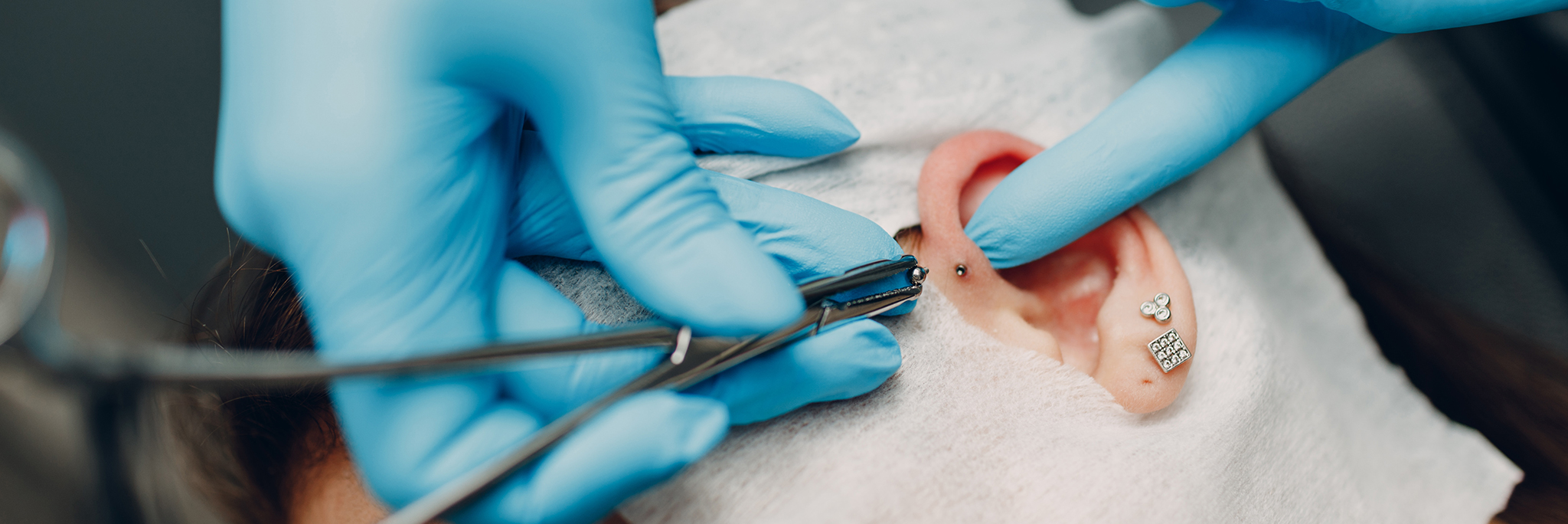
Construction: Threadless or Internally Threaded?
Construction also becomes particularly important for initial jewelry.
With internally threaded jewelry, the threading is inside the post, meaning the external part passing through the piercing channel remains smooth.
With threadless jewelry, there are no screw threads on the wearable post. Instead, the decorative end uses a press-fit pin system.
Both internally threaded and threadless construction are recognized within professional piercing guidance for initial piercing jewelry.
Salamander’s Threadless Body Jewelry collection includes posts and attachments across several materials and designs.
For a more detailed comparison of different closure systems, see our article Threadless, Internally Threaded, or Hinged: Which Body Piercing Jewelry Style Is Right?.
Correct Size Is Part of Product Selection
There is no universal jewelry size that works for every piercing or every person.
Gauge, length and diameter must be appropriate for the placement, anatomy and stage of the piercing.
Jewelry that is too small or too large can create unnecessary problems, which is why professional piercing guidance emphasizes correct sizing for initial jewelry.
For wholesale buyers, this creates an inventory challenge.
It is not enough to stock the right design.
You also need appropriate size coverage.
Our Body Jewelry Size Charts provide reference information for gauge, length, ball size and ring diameter. Final jewelry selection for an individual piercing should, however, be made by a qualified professional piercer based on the client’s anatomy and piercing placement.
Sterility and Initial Piercing Jewelry
Jewelry inserted during a piercing procedure must be handled under appropriate hygienic and sterilization procedures.
For studios, one option is jewelry that has already been sterilized and individually packaged before it arrives.
Salamander offers a dedicated Pre-Sterilized Piercing Jewelry collection containing a broad selection of professional piercing products.
Pre-sterilized inventory can simplify workflow because products can be selected by style and size while remaining individually packaged until required.
Buyers should still manage storage, package integrity, traceability and expiry information according to the product instructions and applicable professional requirements.
What Changes After a Piercing Has Healed?
Once a piercing has fully healed, jewelry selection becomes much broader.
The wearer may choose products based more heavily on:
– appearance
– color
– gemstones
– larger decorative elements
– different ring styles
– fashion trends
– premium materials
– coordinated ear styling
This does not mean quality stops mattering.
Smooth finishing, correct fit and suitable materials remain important.
However, a healed piercing generally offers more flexibility than a fresh piercing because the jewelry is no longer being selected specifically to support newly pierced tissue.
A professional piercer should still be consulted when there is uncertainty about whether a piercing is fully healed or whether a particular style or size is suitable.
Decorative Jewelry Has a Different Commercial Role
From a retail perspective, healed-piercing jewelry creates a major opportunity.
Initial jewelry is often selected because it meets the requirements of the piercing procedure.
Later jewelry can be selected because the customer wants something new.
This is where:
– decorative threadless tops
– gemstones
– gold finishes
– PVD colors
– clickers
– charms
– premium metals
– curated-ear combinations
become especially important.
The customer moves from a functional purchase to a fashion purchase.
Studios that understand both stages can build revenue beyond the initial piercing appointment.
Separate Your Inventory Into Two Jobs
Wholesale buyers and studios can therefore benefit from thinking about inventory in two groups.
Procedure-Oriented Inventory
Priorities include:
– suitable materials
– appropriate construction
– broad core size availability
– dependable supply
– sterilization requirements
– clear specifications and documentation
Retail and Upgrade Inventory
– fashion
– premium finishes
– gemstones
– new designs
– color
– higher-value pieces
– interchangeable attachmentsx
Priorities can expand to include:
The categories overlap, but the buying logic is different.
Trying to make every SKU perform both jobs can lead to an inefficient assortment.
Documentation Matters
Professional buyers should not rely only on product descriptions.
Material documentation, specifications, testing information and manufacturing controls help buyers understand what they are purchasing.
Salamander provides supporting information through our Certifications page and Product Specification page.
For a broader explanation of materials, finishing, construction and standards, you can also read What Makes Piercing Jewelry Safe?.
Final Thoughts
Initial piercing jewelry and jewelry for healed piercings should not be treated as exactly the same product category.
Initial jewelry requires greater attention to material specifications, surface quality, construction, sizing and sterilization.
Once healing is complete, the range of possible designs becomes much broader and fashion, color and personal styling can play a larger role.
For studios and wholesale buyers, understanding the difference creates a better purchasing strategy: Stock professional essentials for the piercing procedure—and build attractive upgrade options for what comes afterwards.
Explore Salamander’s Pre-Sterilized Piercing Jewelry, Threadless Jewelry and complete Wholesale Body Jewelry range.
Author: ITAY IZHARI